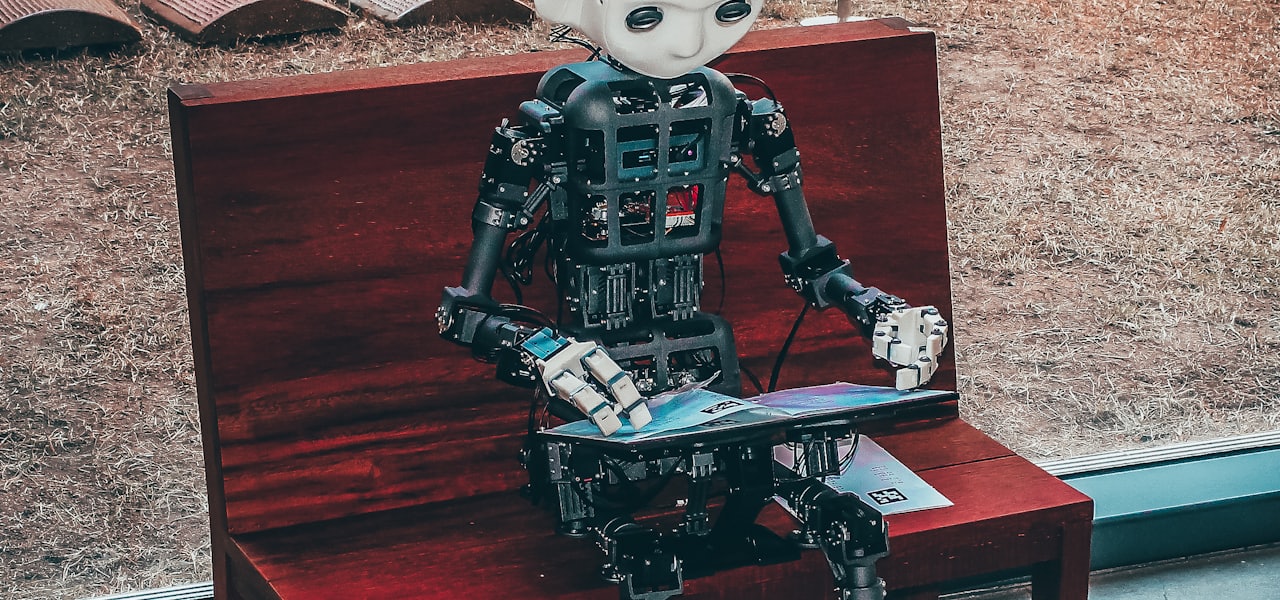
Shopping for the best AI text-to-video tool? An AI text-to-video tool is software that uses machine learning to help you get more done — it keeps getting smarter as the underlying models improve. Pricing, accuracy, and the size of the model behind the tool are the three factors that most affect daily usefulness. Whether you are a beginner or a pro, the right AI text-to-video tool slots into your workflow and pays for itself fast. We tested the leading options and ranked them by quality, value, and ease of use.
Molecular graphics
Molecular graphics is the discipline and philosophy of studying molecules and their properties through graphical representation. IUPAC limits the definition to representations on a "graphical display device". Ever since Dalton's atoms and Kekulé's benzene, there has been a rich history of hand-drawn atoms and molecules, and these representations have had an important influence on modern molecular graphics. Colour molecular graphics are often used on chemistry journal covers artistically. == History == Prior to the use of computer graphics in representing molecular structure, Robert Corey and Linus Pauling developed a system for representing atoms or groups of atoms from hard wood on a scale of 1 inch = 1 angstrom connected by a clamping device to maintain the molecular configuration. These early models also established the CPK coloring scheme that is still used today to differentiate the different types of atoms in molecular models (e.g. carbon = black, oxygen = red, nitrogen = blue, etc). This early model was improved upon in 1966 by W.L. Koltun and are now known as Corey-Pauling-Koltun (CPK) models. The earliest efforts to produce models of molecular structure was done by Project MAC using wire-frame models displayed on a cathode ray tube in the mid 1960s. In 1965, Carroll Johnson distributed the Oak Ridge thermal ellipsoid plot (ORTEP) that visualized molecules as a ball-and-stick model with lines representing the bonds between atoms and ellipsoids to represent the probability of thermal motion. Thermal ellipsoid plots quickly became the de facto standard used in the display of X-ray crystallography data, and are still in wide use today. The first practical use of molecular graphics was a simple display of the protein myoglobin using a wireframe representation in 1966 by Cyrus Levinthal and Robert Langridge working at Project MAC. Among the milestones in high-performance molecular graphics was the work of Nelson Max in "realistic" rendering of macromolecules using reflecting spheres. Initially much of the technology concentrated on high-performance 3D graphics. During the 1970s, methods for displaying 3D graphics using cathode ray tubes were developed using continuous tone computer graphics in combination with electro-optic shutter viewing devices. The first devices used an active shutter 3D system, generating different perspective views for the left and right channel to provide the illusion of three-dimensional viewing. Stereoscopic viewing glasses were designed using lead lanthanum zirconate titanate (PLZT) ceramics as electronically controlled shutter elements. Active 3D glasses require batteries and work in concert with the display to actively change the presentation by the lenses to the wearer's eyes. Many modern 3D glasses use a passive, polarized 3D system that enables the wearer to visualize 3D effects based on their own perception. Passive 3D glasses are more common today since they are less expensive. The requirements of macromolecular crystallography also drove molecular graphics because the traditional techniques of physical model-building could not scale. The first two protein structures solved by molecular graphics without the aid of the Richards' Box were built with Stan Swanson's program FIT on the Vector General graphics display in the laboratory of Edgar Meyer at Texas A&M University: First Marge Legg in Al Cotton's lab at A&M solved a second, higher-resolution structure of staph. nuclease (1975) and then Jim Hogle solved the structure of monoclinic lysozyme in 1976. A full year passed before other graphics systems were used to replace the Richards' Box for modelling into density in 3-D. Alwyn Jones' FRODO program (and later "O") were developed to overlay the molecular electron density determined from X-ray crystallography and the hypothetical molecular structure. === Timeline === == Types == === Ball-and-stick models === In the ball-and-stick model, atoms are drawn as small sphered connected by rods representing the chemical bonds between them. === Space-filling models === In the space-filling model, atoms are drawn as solid spheres to suggest the space they occupy, in proportion to their van der Waals radii. Atoms that share a bond overlap with each other. === Surfaces === In some models, the surface of the molecule is approximated and shaded to represent a physical property of the molecule, such as electronic charge density. === Ribbon diagrams === Ribbon diagrams are schematic representations of protein structure and are one of the most common methods of protein depiction used today. The ribbon shows the overall path and organization of the protein backbone in 3D, and serves as a visual framework on which to hang details of the full atomic structure, such as the balls for the oxygen atoms bound to the active site of myoglobin in the adjacent image. Ribbon diagrams are generated by interpolating a smooth curve through the polypeptide backbone. α-helices are shown as coiled ribbons or thick tubes, β-strands as arrows, and non-repetitive coils or loops as lines or thin tubes. The direction of the polypeptide chain is shown locally by the arrows, and may be indicated overall by a colour ramp along the length of the ribbon.
The Best Free AI Subtitle Generator for Beginners
In search of the best AI subtitle generator? An AI subtitle generator is software that uses machine learning to help you get more done — it turns a rough idea into a polished result in seconds. When choosing one, weigh output quality, pricing, export formats, and how well it fits the tools you already use. Whether you are a beginner or a pro, the right AI subtitle generator slots into your workflow and pays for itself fast. Below we compare features, pricing, and real output so you can choose with confidence.
Eric Brill
Eric Brill is a computer scientist specializing in natural language processing. He created the Brill tagger, a supervised part of speech tagger. Another research paper of Brill introduced a machine learning technique now known as transformation-based learning. == Biography == Brill earned a BA in mathematics from the University of Chicago in 1987 and a MS in Computer Science from UT Austin in 1989. In 1994, he completed his PhD at the University of Pennsylvania. He was an assistant professor at Johns Hopkins University from 1994 to 1999. In 1999, he left JHU for Microsoft Research, he developed a system called "Ask MSR" that answered search engine queries written as questions in English, and was quoted in 2004 as predicting the shift of Google's web-page based search to information based search. In 2009 he moved to eBay to head their research laboratories.
AI Photo Editors: Free vs Paid (2026)
Trying to pick the best AI photo editor? An AI photo editor is software that uses machine learning to help you get more done — it scales effortlessly from a single task to thousands. The best picks balance beginner-friendly simplicity with the depth power users need, and they ship updates often. Whether you are a beginner or a pro, the right AI photo editor slots into your workflow and pays for itself fast. Read on for hands-on impressions, pricing tiers, and the standout features that matter.
Dental AI
Dental artificial intelligence (Dental AI) refers to the application of artificial intelligence (AI) and machine-learning methods to oral healthcare data. These systems can be used to find patterns or make predictions that can aid in diagnosis, treatment, patient communication, or practice management. == History and development == Research into AI for dentistry dates to the 1990s and 2000s, alongside early CAD/CAM and image-analysis work in dental radiology. Recent developments in deep learning, especially those involving computer vision, such as convolutional neural networks, trained on large image datasets, led to a rapid improvement in performance, as well as a move from prototype technology to productization suitable for use in dental chairs. Dental schools and continuing education programs started incorporating AI content in the 2020s. == Definition and core technologies == The dental AI software accomplishes this task by using various dental images and patient data. Dental images and data used by the dental AI software include bitewing and periapical X-rays, complete mouth X-rays, detailed 3D images, intraoral images, and the patient’s medical history. The dental AI software utilizes several core technologies in accomplishing its task of assisting the dentist. First, the dental AI software utilizes machine learning and deep learning using programs that can learn from examples. Such programs are referred to as convolutional neural network (CNN) and can detect cavities and identify bone changes related to gum disease. The dental AI software utilizes computer vision, which enables the AI software to identify and quantify important features in images and data, whether they are 2D images or 3D images. Natural language processing (NLP) is used for the AI software to understand written text and can automatically generate dental notes and communicate with the patient. Furthermore, the dental AI software utilizes predictive analytics to identify patients that are more prone to dental complications and can suggest the best intervals for checkups or future dental procedures. == Applications in dentistry == Reported clinical and operational applications include diagnostic assistance for caries and periodontal disease, treatment planning assistance, patient education overlays, quality assurance, curriculum assistance for dental education, and claims documentation. Systematic reviews continue to find image-based applications such as caries detection with some variability in study design and a need for prospective validation. == Academic research and clinical validation == Several peer-reviewed studies have measured the effectiveness of AI for applications such as interproximal caries detection and periodontal bone level assessment, showing improvements over unaided readings with a focus on bias within the dataset. The Dental AI Council found variability among clinicians for diagnosis and treatment planning, suggesting the use of a standard tool as an assist. == Industry adoption == Multiple vendors offer FDA-cleared chairside AI for dental imaging: Pearl — Received U.S. FDA 510(k) clearance for its real-time radiologic aid (“Second Opinion”) in 2022 (2D), with subsequent clearances including pediatric and CBCT (“Second Opinion 3D”). TIME gave “Second Opinion” a special mention on its Best Inventions of 2022 list. Overjet — FDA-cleared for bone-level quantification and detection/outline of caries and calculus (e.g., K210187), with additional clearances expanding capabilities. VideaHealth — Received an FDA 510(k) covering 30+ detections across common dental findings (K232384), including indications for patients ages 3 and up; trade coverage has described elements of this as the first pediatric dental-AI clearance. == Regulations == In the U.S., AI-enabled dental imaging software is generally reviewed via the FDA’s 510(k) pathway. The FDA maintains a public AI-Enabled Medical Devices List, which includes numerous medical-imaging AI tools (including dental). Specific dental clearances include Overjet (K210187), VideaHealth (K232384), and Pearl entries such as “Second Opinion 3D” (K243989).
Svetlana Lazebnik
Svetlana Lazebnik (born 1979) is a Ukrainian-American researcher in computer vision who works as a professor of computer science and Willett Faculty Scholar at the University of Illinois at Urbana–Champaign. Her research involves interactions between image understanding and natural language processing, including the automated captioning of images, and the development of a benchmark database of textually grounded images. == Education and career == Lazebnik was born in Kyiv in 1979 to a family of Ukrainian Jews, and emigrated with her family to the US as a teenager. She majored in computer science at DePaul University, minoring in mathematics and graduating with the highest honors in 2000. She completed her Ph.D. in 2006 at the University of Illinois at Urbana–Champaign, with the dissertation Local, Semi-Local and Global Models for Texture, Object and Scene Recognition supervised by Jean Ponce. After postdoctoral research at the University of Illinois, she became an assistant professor at the University of North Carolina at Chapel Hill in 2007. She returned to the University of Illinois as a faculty member in 2012. She is a co-editor-in-chief of the International Journal of Computer Vision. == Recognition == Lazebnik was named an IEEE Fellow in 2021, "for contributions to computer vision". With Cordelia Schmid and Jean Ponce, she won the Longuet-Higgins Prize in 2016 for the best work in computer vision from ten years earlier, for their work on spatial pyramid matching.